On this page
For most of us, the main-door lock has always been a heavy key on a ring and a spare one hidden somewhere "safe". It works. So why are so many families switching to smart locks? And is it actually a good idea for yours?
Here's an honest comparison, without the hype.
How each one works
A traditional lock is purely mechanical. A key turns a cylinder, which moves the bolts. Nothing to charge, nothing to set up. Its security depends on the quality of the cylinder and the bolts, and on who has a copy of the key.
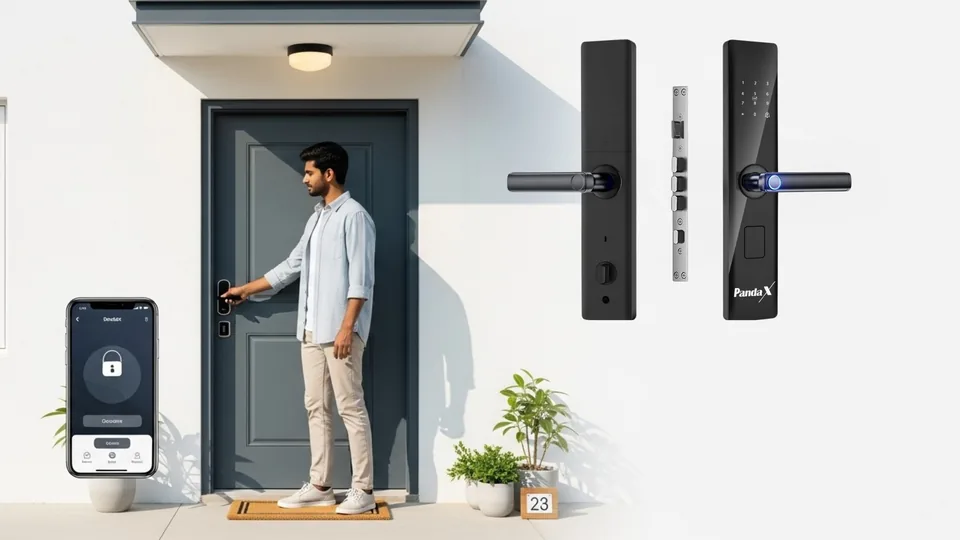
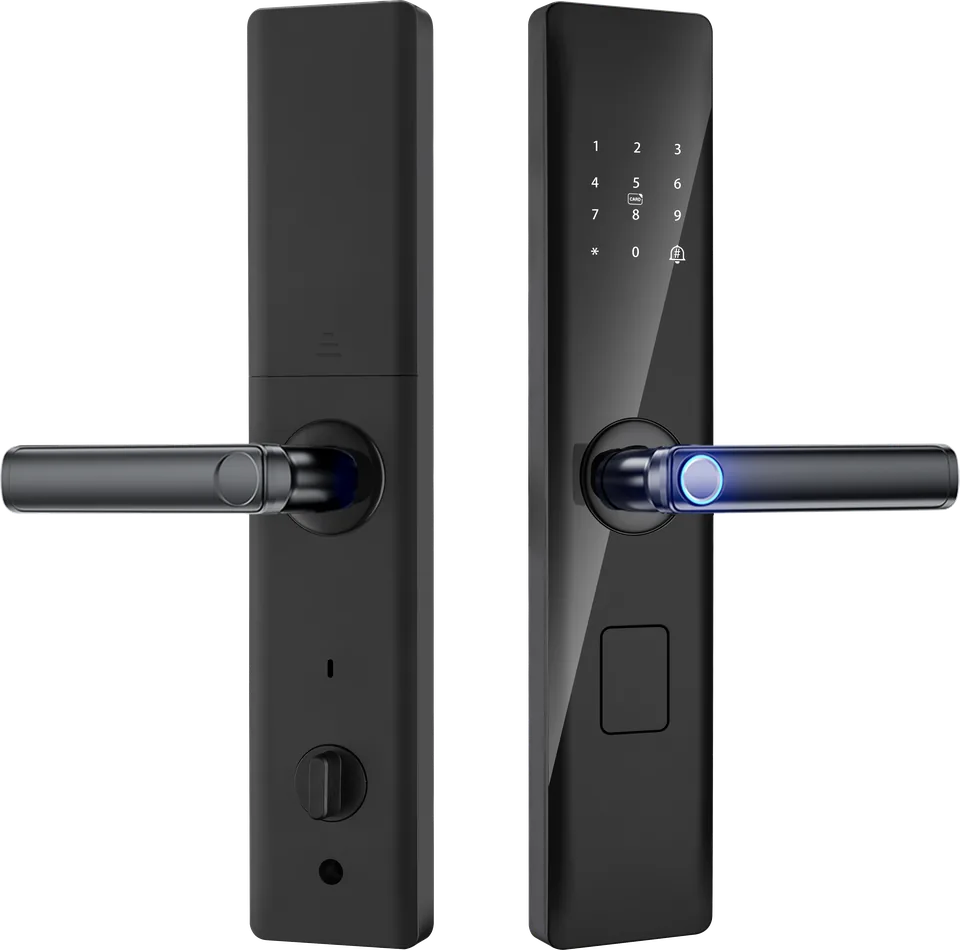
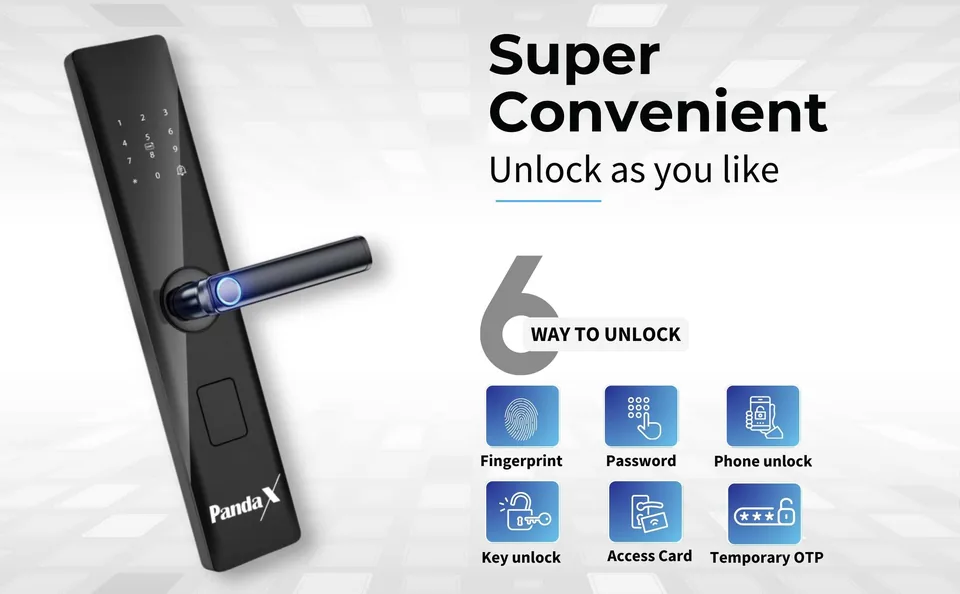
A smart door lock keeps the mechanical parts — a lock body with bolts, and usually a key cylinder as backup — and adds an electronic front panel. You can open it with a fingerprint, a PIN code, a card, a phone app, or a temporary code, as well as a key. It runs on batteries.
Everyday convenience
This is where smart locks shine.
- No keys to carry or lose. Your fingerprint is always with you. No more "who has the key?" calls when the kids get home early.
- No spare key under the doormat. Give house help a card or their own PIN instead, and remove it any time.
- Open the door when you're not there. With app-connected locks, you can unlock remotely or send a one-time code to a relative, a plumber or a delivery person.
- Know who came and went. App-connected locks keep a log, so you can see when your child got home or when the cook arrived.
- Auto-lock. Many smart locks lock themselves after you close the door, so nobody forgets.
A traditional lock can't do any of this. On the other hand, it's very simple: anyone in the family understands a key.
Chabi dhoondhna band. Bas ungli lagao, aur ghar mein.
Security: which is safer?
It depends far more on quality than on whether a lock is "smart".
Where traditional locks are vulnerable:
- Keys get copied, lost or left with old tenants, staff or relatives.
- Basic cylinders can be picked.
- You have no idea if someone has used a key while you were away.
Where smart locks help:
- You can delete a fingerprint, PIN or card the moment you need to. No locksmith needed.
- Many smart locks raise an alarm and freeze the keypad after several wrong attempts.
- Anti-peep features let you type random digits around your real PIN so onlookers can't learn it.
- App alerts can tell you about unlocks or tampering.
Where smart locks need care:
- They still have a mechanical key cylinder. Choose a good one (check the cylinder grade).
- Treat your PIN like a bank PIN. Don't share it widely; use temporary codes for visitors.
- Keep the app account secure, with a strong password, and give admin access only to trusted family members.
- No lock is "unbreakable" or "hack-proof". Be wary of anyone who says otherwise.
In short: a well-made smart lock, fitted properly and used sensibly, gives you more control than a key lock. A poorly made one doesn't.
Power cuts and dead batteries
This is the number-one worry, so let's be clear.
- Power cuts don't matter. Smart locks run on their own batteries, not your home's electricity.
- Batteries do need changing. Typically every few months, depending on the lock and how often the door is used. The lock warns you when they're low.
- If the batteries die completely, most smart locks have an emergency USB port outside for a power bank, plus the mechanical key.
So the practical rule is: change batteries when the lock asks, and keep the mechanical key somewhere safe outside the house — with a trusted neighbour or family member, not under the mat.
Does a smart lock need Wi-Fi or internet?
Not to open the door. Fingerprint, PIN, card and key work without any network. Wi-Fi only adds the remote features: app unlock, temporary codes, alerts and the activity log. If your internet goes down, the lock still works at the door.
Installation and your door
A traditional lock can often be swapped by a local carpenter in minutes. A smart mortise lock needs more care: the door edge is cut for the lock body, and holes are drilled for the panels. It has to suit your door's thickness and material, and the outer panel needs a covered spot away from direct rain and sun.
If you rent, ask your landlord or society first. If you own, plan it with your carpenter or ask the brand for professional installation. Our guide on how to choose a smart door lock for your main door has a checklist to run through first.
Cost: upfront and over time
| Item | Traditional lock | Smart door lock |
|---|---|---|
| Upfront price | Lower | Higher |
| Installation | Simple | Needs a trained technician (often included) |
| Running cost | Nil | AA batteries a few times a year |
| Lost key | Re-key or replace the cylinder | Delete the card or PIN in seconds |
| Giving access | Cut more keys | Add a fingerprint, PIN, card or one-time code |
| Remote access | Not possible | Possible with Wi-Fi |
Who benefits most from a smart lock?
- Working couples who come and go at different times and receive deliveries.
- Families with school-going children who come home before the parents.
- Elderly parents living alone, where a son or daughter in another city can manage access, let in a doctor or relative remotely, and know when the door was used.
- Homes with regular help: cook, maid, driver.
- Landlords and rental hosts who change tenants or guests often.
A traditional lock may still be enough if very few people use the door, you're comfortable with keys, and you don't need remote access. Many families also keep a traditional lock on the safety door and fit a smart lock on the main door.
The bottom line
A smart lock doesn't replace good security habits. It makes them easier. Fewer keys floating around, better control of who gets in, and no more panic over a lost bunch of keys. The trade-off is a higher upfront cost, a few battery changes a year, and the need to choose a quality lock that suits your door.
Where PandaX fits
The PandaX Smart Door Lock keeps the reliable mechanical basics — a 5-bolt mortise body, a Grade C cylinder and a mechanical key — and adds five more ways to unlock: fingerprint (up to 100), a 6–12 digit PIN with an anti-peep virtual code, RFID card, remote unlock in the Smart Life app, and temporary or one-time codes. It has a wrong-attempt alarm, auto-lock and an activity log in the app.
It runs on 4 AA batteries — approximately 6 months or up to 1,000 unlocks — with a low-battery alert and an emergency Micro-USB port. It works without Wi-Fi; app features need 2.4 GHz Wi-Fi. It suits wooden, steel and aluminium doors 35–65 mm thick, fitted under cover. We recommend professional installation and offer it free, and it comes with a 2-year warranty.
Frequently asked questions
Can a smart lock be opened with a key?
Most can, including PandaX. The mechanical key is your backup.
What happens if I forget my PIN?
Use your fingerprint, card or key, then reset the PIN from the lock's admin menu or app.
Do I need to change anything in my door?
A smart mortise lock needs the door edge cut and panel holes drilled, so it's best fitted by a trained technician.
Still not sure? Ask us.
Send us a photo of your door or your question on WhatsApp. A real person from our team replies, usually within 24 hours.
+91 87996 33536 · Mon–Sat, 10 am – 7 pm IST